
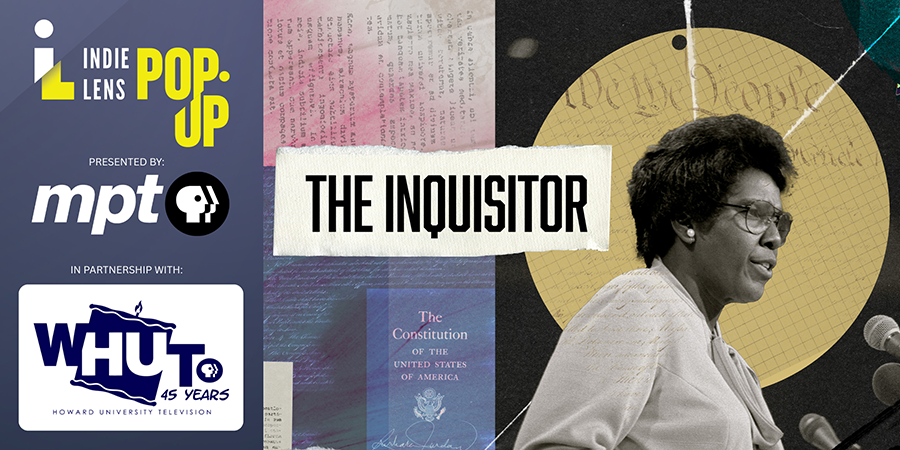
WHUT & MPT Host a FREE Screening of The Inquisitor
The Inquisitor Screening
Location: WHUT - Howard University Television, 2222 Fourth St. NW, Washington, D.C., DC 20059
Date and time: Thu, Feb 19, 2026 4:00 PM - 6:00 PM
Organizer: Maryland Public Television, (410) 581-4137, outreach@mpt.org
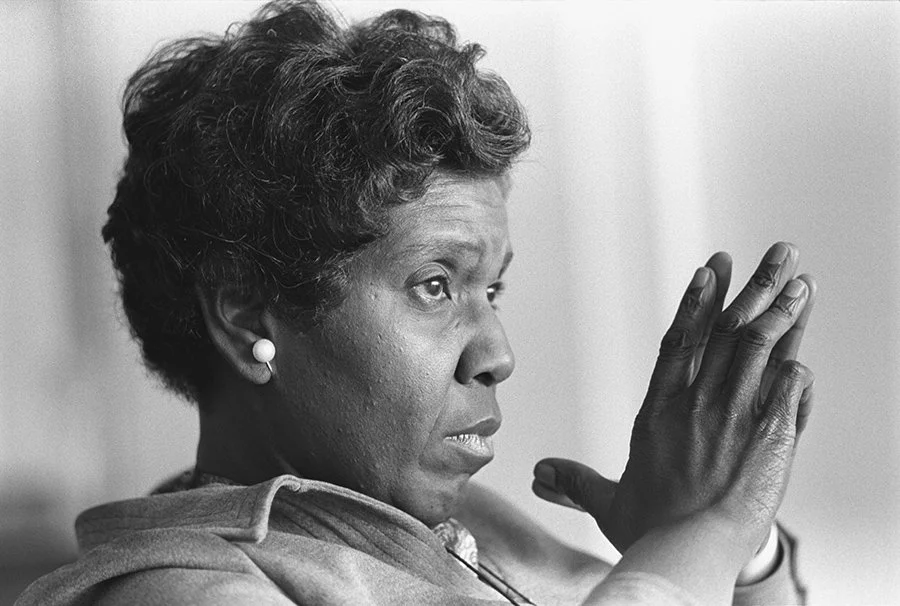
Barbara Jordan
In celebration of Black History Month, explore the life and legacy of Barbara Jordan, a groundbreaking Texas congresswoman whose sharp intellect and moral clarity transformed U.S. politics. Enjoy a one-hour cutdown of the film and an engaging fireside chat with Howard University industry professionals to reflect on Barbara Jordan’s life, discuss the current journalistic landscape, and vision cast for the future! Join MPT and WHUT at Howard University for a FREE preview screening of The Inquisitor from PBS Independent Lens, before its February 23 premiere. Light refreshments will be served.
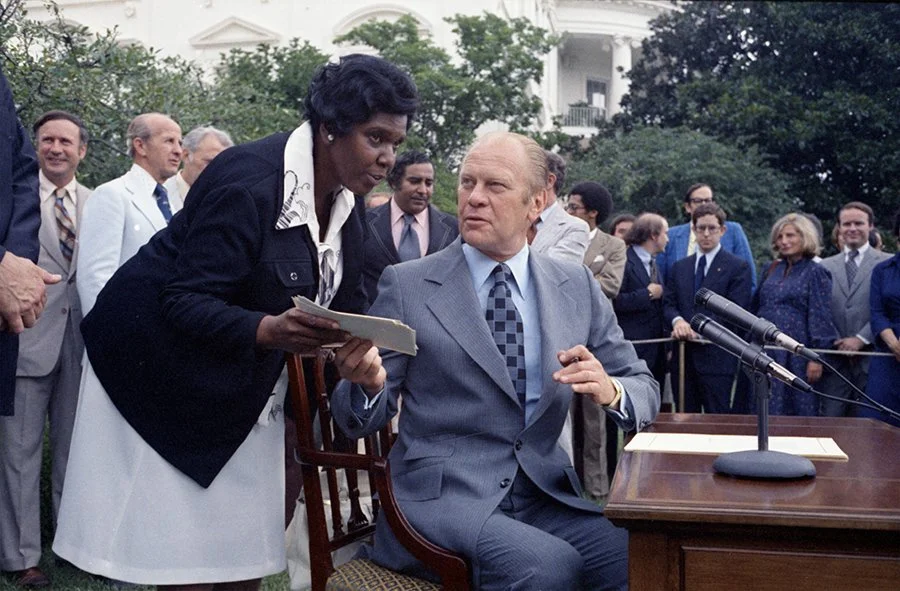
Historical Context and Background
1936–1959
Jordan’s Early Life and Education
Barbara Jordan was born on February 21, 1936.
Jordan grew up in segregated Houston’s Fifth Ward to Ben and Arlyne Jordan.
The Supreme Court made a landmark decision in the Brown v. Board of Education case in 1954. This case, among others, opened up political opportunities.
Jordan received her bachelor’s degree in political science and history from Texas Southern University in 1956.
Jordan received her law degree from Boston University School of Law in 1959.
1960–1966
Jordan’s Early Career
Jordan started her law practice in Houston out of her family’s living room and became involved in the Kennedy and Johnson campaigns.
Jordan had two unsuccessful runs for the Texas House of Representatives in 1962 and 1964.
Meanwhile, women and women’s rights became more prominent and introduced notable contemporaries like Shirley Chisholm and Bella Abzug.
The Jim Crow Era ended with the passage of landmark cases like The Civil Rights Act of 1964 and The Voting Rights Act of 1965.
1967–1972
Jordan’s Term as State Senator
Jordan became the first Black state senator in Texas since 1883 and the first Black woman to serve in the Texas Senate.
Congress passed the Equal Rights Amendment (ERA) on March 22, 1972, but the states failed to ratify the amendment.
Jordan met Nancy Early during her term as State Senator.
1973–1979
Jordan’s Term in the U.S. House of Representatives
Jordan became the first Southern Black woman elected to Congress, joining the U.S. House of Representatives. While serving, Jordan was diagnosed with multiple sclerosis in 1973.
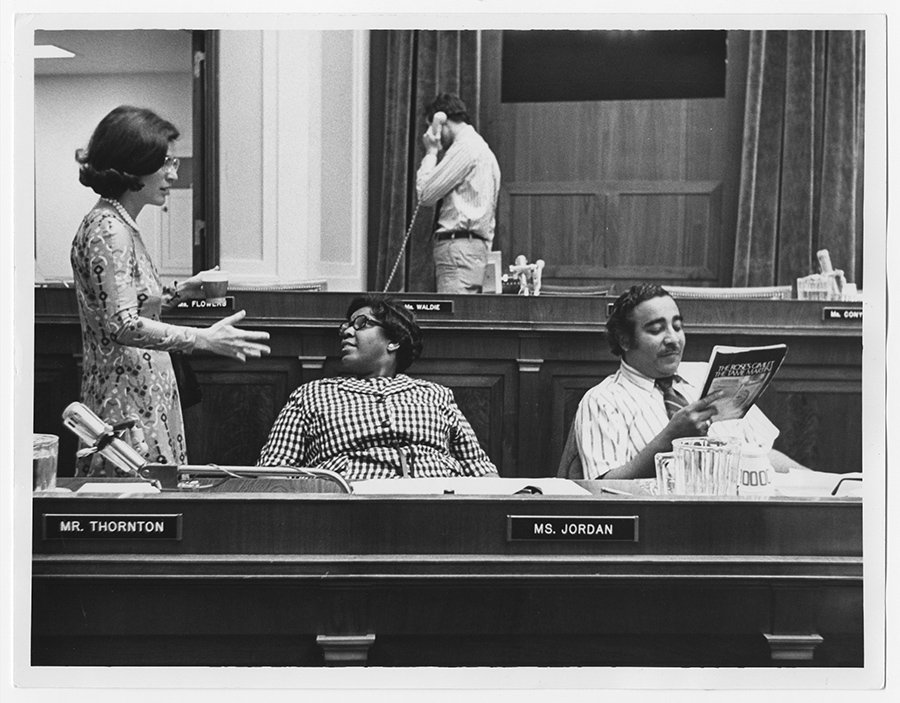
During the Watergate Hearings, Jordan presented her argument about the Constitution as part of the House Judiciary Committee on July 25, 1974. Following the hearings, Nixon became the first U.S. president to resign from office on August 9, 1974.
Jordan became the first Black woman to be a keynote speaker at the Democratic National Convention in 1976.
In 1978, Jordan announced she would not seek re-election to Congress.
1979–1996
Jordan’s Post-Congressional Career
In 1979, Jordan returned to Texas and became a professor at the LBJ School of Public Affairs at the University of Texas.
Jordan became an ethics advisor and chair of the Commission on Immigration Reform to Texas Governor Ann Richards.
U.S. Congress passed the Americans with Disabilities Act (ADA), meant to prohibit discrimination and ensure accessibility.
Jordan returned to the Democratic National Convention stage, making her remarks from her wheelchair. In doing so, she raised the visibility of disability on a national stage.
January 17, 1996
Death of Barbara Jordan
Jordan continued speaking publicly while battling multiple sclerosis until her death.
Barbara Jordan passed away after a battle with leukemia. Jordan became the first Black woman buried in the Texas State Cemetery.
INDIE LENS POP-UP
For more than 20 years, the award-winning Indie Lens Pop-Up program has partnered with local organizations across the country to bring people together for film screenings and community-driven conversations. Inspired by the documentaries featured on PBS’s Independent Lens, Indie Lens Pop-Up is a space for sharing ideas and making connections that shape our understanding of ourselves and the world around us. Since its inception in 2005, nearly half a million participants have come together at Indie Lens Pop-Up events to discuss issues that impact local communities. Learn more at pbs.org/indielenspopup.
INDEPENDENT LENS
Independent Lens is an award-winning documentary series that fosters understanding, seeks to build empathy, and encourages a more united society. Produced by ITVS, Independent Lens documentaries have premiered on PBS for 25 years and streamed on YouTube, helping Americans foster deeper connections between communities and themselves. From the Oscar-nominated I Am Not Your Negro to the Peabody-acclaimed docuseries Philly D.A. and the Emmy® award-winning The Invisible War, Independent Lens provides viewers with in-depth, nuanced storytelling reflecting the experiences of people from a variety of voices and communities. Funding is provided by the Action Circle for Independent Lens with major funding from the John D. and Catherine T. MacArthur Foundation, Acton Family Giving, Ford Foundation, and Jonathan Logan Family Foundation, with additional support from Artemis Rising Foundation, Wyncote Foundation, Park Foundation, Brandt Jackson Foundation, the deNovo Initiative, and RandomGood Foundation. Additional support has been provided by the Corporation for Public Broadcasting.
Stream anytime on the PBS app or YouTube. Learn more at pbs.org/independentlens.
ITVS
Independent Television Services (ITVS) is the largest co-producer of independent documentaries in the United States. For more than 30 years, the San Francisco non-profit has funded and partnered with documentary filmmakers to produce and distribute untold stories. ITVS incubates and co-produces these award-winning titles and premieres them on our Emmy® Award-winning PBS series, Independent Lens. ITVS titles appear on PBS, WORLD, NETA, and can be streamed on various digital platforms, including the PBS app. ITVS is funded by the John D. and Catherine T. MacArthur Foundation, Acton Family Giving, Ford Foundation, Jonathan Logan Family Foundation, Artemis Rising Foundation, Wyncote Foundation, Park Foundation, Brandt Jackson Foundation, the deNovo Initiative, and RandomGood Foundation. Additional support has been provided by the Corporation for Public Broadcasting. Learn more at itvs.org.