
Remembering Jesse Jackson: A Legacy of Hope, Justice, and Community in the DMV
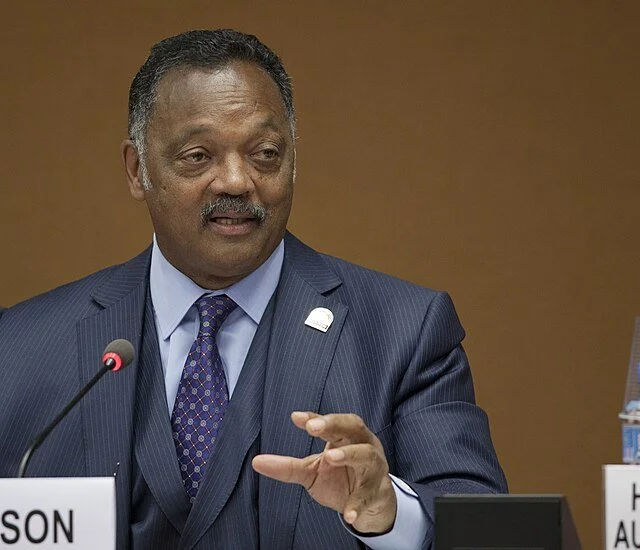
Reverend Jesse Jackson spoke at the UN today for the International Day for the Elimination of Racial Discrimination.
Over the past six decades, few figures have shaped the struggle for civil rights, economic justice, and voter empowerment in the Washington, D.C.–Maryland–Virginia region quite like Rev. Jesse Louis Jackson. As a prominent organizer, preacher, political leader, and tireless advocate for equality, Jackson’s influence echoed through the streets of the DMV — from the steps of Howard University to neighborhood rallies and voter registration drives across the region.
Born in Greenville, South Carolina in 1941, Jackson rose from humble beginnings to join the front lines of the national civil rights movement alongside his mentor, Martin Luther King Jr.. His journey from Southern activism to national leadership helped galvanize communities here in the DMV, where longstanding traditions of Black political engagement and grassroots organizing found one of their most passionate champions.
A Lasting Impact on Howard University
For generations of students at Howard University — often called “The Mecca” — Rev. Jesse Jackson represented the living continuation of the civil rights movement they studied in classrooms. His visits to campus were more than speaking engagements; they were moments of mentorship, mobilization, and moral clarity.
Jackson frequently challenged Howard students to see themselves not only as scholars, but as leaders with a responsibility to shape public policy, media narratives, and economic opportunity. His call to “Keep Hope Alive” resonated deeply with students preparing to enter law, journalism, medicine, politics, and ministry.
Through his work with the Rainbow PUSH Coalition and his historic presidential campaigns, Jackson expanded what political possibility looked like for young Black leaders — many of whom were educated right here in the District. His 1984 and 1988 presidential runs inspired campus organizing, civic participation, and conversations about representation that energized Howard’s political culture.
For students studying communications, Jackson’s mastery of message and moral framing offered a blueprint. For those in political science and public service, he demonstrated how grassroots organizing could move national policy. And for the broader Howard community, he embodied the university’s enduring commitment to truth, leadership, and social justice.

Jesse Jackson speaking during an interview in July 1, 1983.
Championing the Vote and Civic Participation
Long before “get out the vote” became a staple of modern political campaigns, Rev. Jackson was organizing voter registration efforts in urban neighborhoods and on college campuses — including right here in the District. His commitment to expanding the franchise resonated deeply in the DMV, a region with one of the nation’s most civically engaged Black electorates.
With the rallying cry “Keep Hope Alive,” Jackson inspired generations to see voting not just as a right, but as a responsibility — empowering residents across D.C., Prince George’s County, and Northern Virginia to make their voices heard.
Standing with Local Movements
In Washington, D.C., Jackson’s presence was more than symbolic. He stood with residents confronting displacement and advocated for fair housing, economic equity, and justice in historically Black communities across the city.
Whether addressing crowds at Howard, supporting clergy coalitions, or joining rallies for civil rights protections, Jackson consistently reinforced the idea that justice must be local as well as national.
A Spiritual and Generational Bridge
For many in the DMV, Rev. Jackson was not only a national figure — he was a familiar voice in our civic life. His presence at churches, universities, and community forums served as a bridge between generations of leadership, connecting the civil rights era to today’s movements for voting rights, economic fairness, and racial justice.
His affirmation — “I am somebody” — continues to resonate in classrooms, sanctuaries, and community centers throughout the region.
A Legacy That Lives On
Rev. Jackson’s legacy is embedded in the DMV’s ongoing advocacy — in the organizers mobilizing communities, the students finding their voices, and the elected leaders working to expand opportunity and equity.
As a public media institution rooted in the nation’s capital, WHUT-TV honors Rev. Jesse Jackson not only as a national icon of justice, but as a steadfast advocate who uplifted and empowered communities right here at home.
Watch & Learn: PBS Programming on Rev. Jesse Jackson
Viewers can continue exploring Rev. Jackson’s life and impact through PBS programming, including:
American Experience – Documentaries examining pivotal figures and movements in American history, including the modern civil rights era.
Frontline – In-depth reporting on political power, social movements, and the evolving fight for justice in America.
Special coverage and archival features available through WHUT highlighting Jackson’s historic presidential campaigns, the Rainbow Coalition movement, and decades of advocacy.
Through storytelling, reflection, and community dialogue, public media continues the work Rev. Jesse Jackson championed — informing, empowering, and keeping hope alive for generations to come.